
This homemade meringue recipe is a simple, classic dessert staple that’s light, fluffy, and perfectly sweet. Whether you’re topping a pie, crafting delicate cookies, or whipping up mini meringues, this recipe will guide you to achieve that perfect glossy finish every time.
I remember the first time I made meringue, it felt like a magical transformation. With just a few simple ingredients, those humble egg whites whipped up into beautiful, cloud-like peaks.
It’s become a go-to for me when I want an impressive yet incredibly easy dessert element. Let me show you how to make it perfectly every time.
What’s Inside This Recipe?
Ingredients for the perfect meringue
Making meringue is all about simplicity and precision. Here’s what you’ll need to get started:
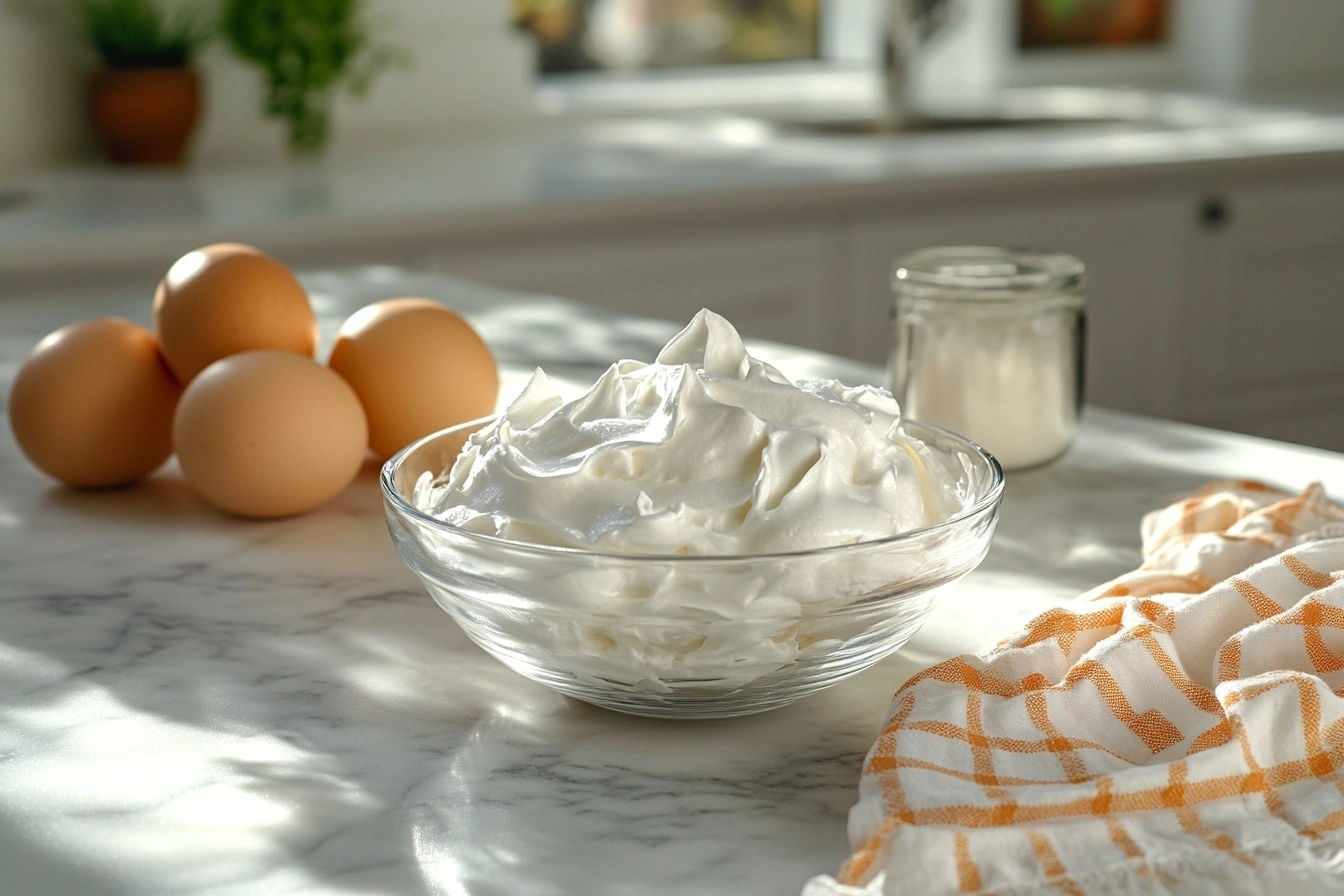
- 4 large egg whites (140g), at room temperature
- 1/4 teaspoon (0.75g) cream of tartar
- 1/4 cup (50g) sugar
You’ll also want to ensure you have a spotlessly clean mixing bowl and beaters—this helps the egg whites whip up properly.
How to make homemade meringue
Making meringue might seem intimidating, but trust me, it’s easy once you know the steps. Let’s get started:
1. Prepare the egg whites
Start by separating your eggs. It’s easier to do this when the eggs are cold, so take them straight from the fridge for this step.
Carefully separate the whites from the yolks (even a small bit of yolk can prevent the whites from whipping up). Let the egg whites sit out until they reach room temperature—this ensures they whip to their fullest potential.
2. Preheat the oven
Preheat your oven to 350°F. If you’re making meringue cookies, you can lower the temperature to around 200°F for a slower bake.
3. Whip the egg whites
Pour the room-temperature egg whites into a clean, dry bowl. Using a hand or stand mixer, whip the egg whites on medium speed until they turn glossy and smooth.
4. Add cream of tartar
Once the egg whites are nicely whipped, add the cream of tartar. This helps the meringue hold its shape and prevents it from collapsing.
5. Incorporate the sugar
Gradually add the sugar, one tablespoon at a time, while continuing to beat the egg whites. Take your time with this step—it’s key to achieving stiff, glossy peaks.
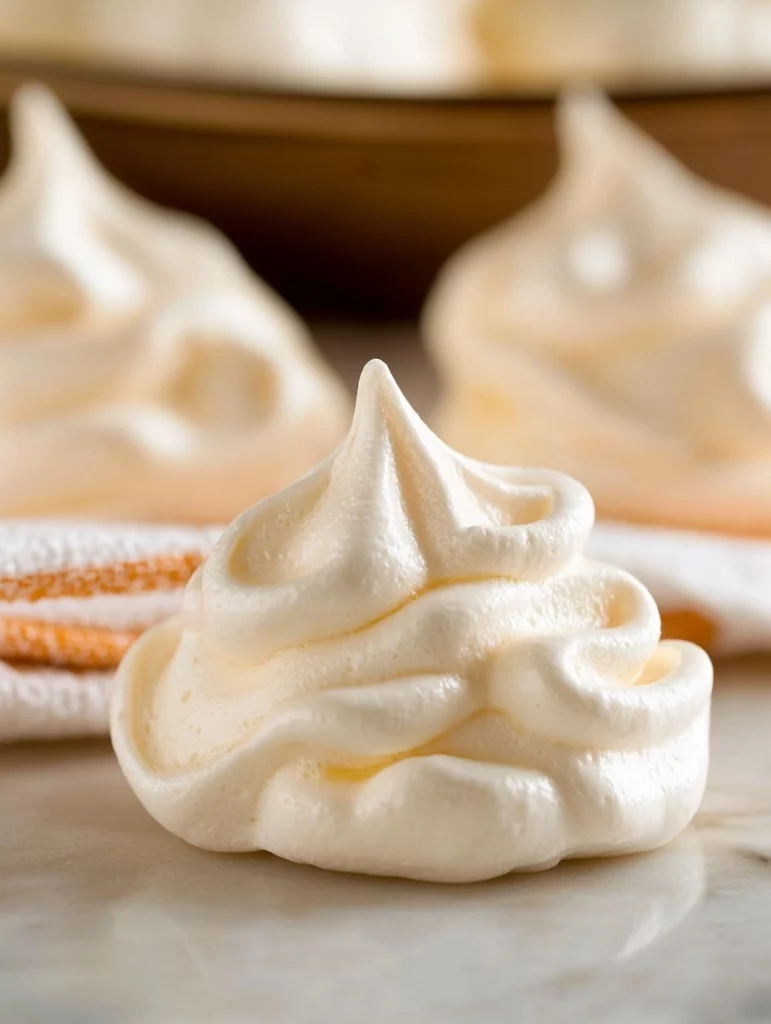
You’ll know the meringue is ready when you can lift the beaters, and the peaks hold their shape without drooping.
6. Bake or top your dessert
If you’re using the meringue as a pie topping, spread it evenly over your pre-baked or no-bake dessert. Place the dessert about 4 inches under the oven’s heat source and bake for about 10 minutes, or until the meringue is golden brown.
For meringue cookies, pipe or spoon small dollops onto a parchment-lined baking sheet and bake at 200°F for about 1.5 hours, then let them cool completely in the oven.
How to serve your meringue
- Meringue is incredibly versatile! Use it to top lemon meringue pie, banana pudding, or even as a dramatic finish for baked Alaska.
- If you’re making cookies, pair them with coffee or tea for a light and sweet treat. For an extra pop of flavor, drizzle melted chocolate or sprinkle crushed nuts over the cookies before baking.
Storing and enjoying leftovers
- If you have leftover meringue cookies, store them in an airtight container at room temperature for up to two weeks. Avoid refrigeration, as it can cause the meringues to lose their crisp texture.
- For pie toppings, it’s best to enjoy them fresh, but you can keep leftovers in the fridge for up to two days.
Top tips for customizing your meringue
- Add vibrant colors: For special occasions, mix a drop or two of gel food coloring into the meringue before piping.
- Flavor it up: Try adding a splash of vanilla extract, almond extract, or even a pinch of cinnamon for extra depth of flavor.
- Make it chewy: For a chewy center, bake your meringue cookies for a slightly shorter time or at a higher temperature.
- Try French meringue: This technique involves whipping the sugar directly into the egg whites for an ultra-light result.
Your questions about meringue answered
What’s the secret to perfect meringue?
The key is ensuring your bowl and beaters are completely clean and free of any grease. Also, take your time adding the sugar, this helps the meringue achieve stiff peaks.
Can I make meringue without cream of tartar?
Yes! While cream of tartar helps stabilize the egg whites, you can substitute it with a splash of lemon juice or white vinegar.
Why isn’t my meringue forming stiff peaks?
This could be due to grease or moisture in your bowl or beaters, or adding the sugar too quickly. Double-check your equipment and try again.
Can I freeze meringue?
Meringue cookies freeze well! Store them in a freezer-safe container for up to a month. However, meringue pie toppings don’t freeze well and are best enjoyed fresh.
How do I know when my meringue is done baking?
For cookies, they should be dry to the touch and easily lift off the parchment. For pie toppings, look for a golden-brown color.
So simple, so elegant, so delicious!
I hope this recipe inspires you to create something light, sweet, and totally impressive in your kitchen. Meringue is one of those recipes that feels fancy but is really so simple to make.
Whether you’re topping a pie or making delicate cookies, I’d love to hear how it turns out for you! Leave a comment below or share your creations on social media—don’t forget to tag WandaRecipes.com.
Looking for more dessert inspiration? Check out my recipes for fluffy whipped cream, classic lemon bars, or easy chocolate mousse. Let’s keep cooking together!
homemade meringue
Ingredients
- 4 large egg whites 140g, at room temperature
- 1/4 teaspoon 0.75g cream of tartar
- 1/4 cup 50g sugar
Instructions
Prepare the egg whites
- Start by separating your eggs. It’s easier to do this when the eggs are cold, so take them straight from the fridge for this step.
- Carefully separate the whites from the yolks (even a small bit of yolk can prevent the whites from whipping up). Let the egg whites sit out until they reach room temperature—this ensures they whip to their fullest potential.
Preheat the oven
- Preheat your oven to 350°F. If you’re making meringue cookies, you can lower the temperature to around 200°F for a slower bake.
Whip the egg whites
- Pour the room-temperature egg whites into a clean, dry bowl. Using a hand or stand mixer, whip the egg whites on medium speed until they turn glossy and smooth.
Add cream of tartar
- Once the egg whites are nicely whipped, add the cream of tartar. This helps the meringue hold its shape and prevents it from collapsing.
Incorporate the sugar
- Gradually add the sugar, one tablespoon at a time, while continuing to beat the egg whites. Take your time with this step—it’s key to achieving stiff, glossy peaks.
- You’ll know the meringue is ready when you can lift the beaters, and the peaks hold their shape without drooping.
Bake or top your dessert
- If you’re using the meringue as a pie topping, spread it evenly over your pre-baked or no-bake dessert. Place the dessert about 4 inches under the oven’s heat source and bake for about 10 minutes, or until the meringue is golden brown.
- For meringue cookies, pipe or spoon small dollops onto a parchment-lined baking sheet and bake at 200°F for about 1.5 hours, then let them cool completely in the oven.
Notes
Flavor it up: Try adding a splash of vanilla extract, almond extract, or even a pinch of cinnamon for extra depth of flavor.
Make it chewy: For a chewy center, bake your meringue cookies for a slightly shorter time or at a higher temperature.
Try French meringue: This technique involves whipping the sugar directly into the egg whites for an ultra-light result.


